
Review: The Wizard of Oz - Oyster Lane Theatre Group
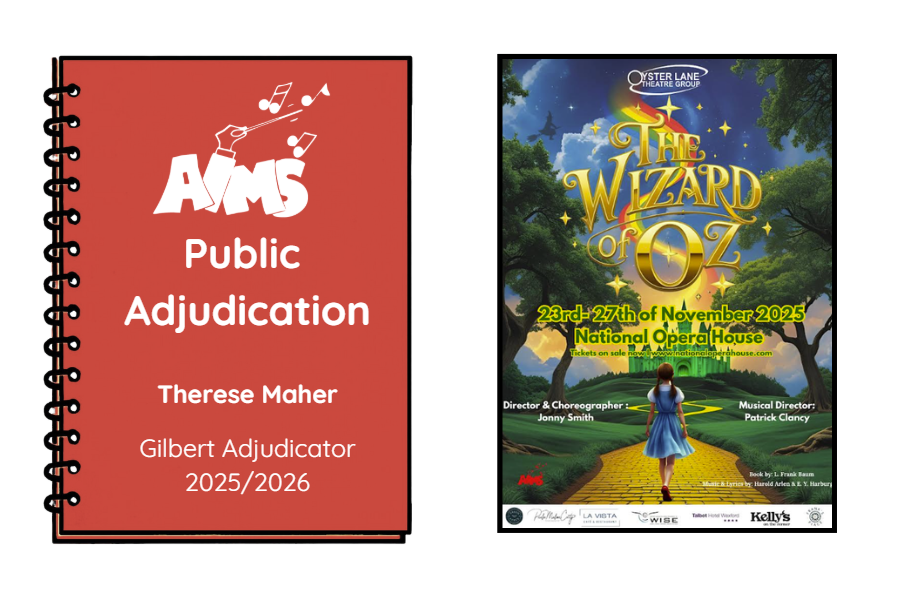
Society name: Oyster Lane Theatre Group
Show name: The Wizard of Oz
Adjudicator date of attendance: 26/11/2025
Oyster Lane Theatre Group delivered a visually spectacular and warmly engaging production of The Wizard of Oz, a show that clearly benefited from careful preparation, strong design choices, and a committed cast spanning a wide range of ages. From the moment the curtain opened, it was clear that this would be a visually led storytelling experience, with colour, movement, and atmosphere playing a central role in shaping the world of Oz. The scale of the production felt ambitious yet well judged, and the company’s confidence in handling such a well-known and frequently produced title was evident throughout.
The Wizard of Oz can sometimes feel episodic or overly long if pacing and visual variety are not carefully managed, but this production maintained forward momentum and a clear sense of flow. Transitions were slick, visual storytelling was strong, and the audience was consistently offered something to engage with, whether through movement, projection, or performance. While there were moments where narrative clarity could be deepened, particularly in linking Dorothy’s dream world more explicitly to her real life, the overall experience was one of polish, warmth, and genuine theatrical enjoyment.
Jonny Smith’s direction showed imagination, confidence, and a strong visual eye. The decision to open the show in a 1920s cinema rather than on the Kansas farm was a particularly inspired choice, immediately reframing the story as one rooted in escapism, fantasy, and the magic of storytelling itself. This concept provided a clever lens through which to view Dorothy’s journey and worked especially well in the early stages of the production. The choice not to fully return to this idea at the end slightly weakened its impact. The absence of the three friends transforming back into ushers, combined with the omission of Miss Gulch and the Peddlar earlier on, meant that the traditional emotional payoff, where Dorothy recognises the parallels between her real life and her dream, was less clearly articulated. While the story still functioned, this missing connection softened some of the emotional resonance that makes the piece so enduring.
There were also moments where staging choices created distance between performers and audience. A significant amount of action took place very far upstage, particularly in scenes involving fewer characters. This was most noticeable in the final scene, where greater intimacy would have heightened the emotional impact. Eyeline choices further compounded this distance, with much of the cast’s focus directed towards the stalls. For audience members seated in the balcony, this resulted in a sense of exclusion from the exchange of energy.
A more conscious use of lifted eyelines and spatial awareness would help ensure the storytelling reaches the full auditorium. That said, character development across the show was generally strong, with performances feeling natural, grounded, and well connected. The pacing was well managed, and despite the length of the show, it never felt overly drawn out.
The use of a puppet for Toto was a particularly charming touch, adding originality and warmth. While a few off-focus moments needed more attention, the concept itself worked very effectively.
Musically, Patrick Clancy’s direction was a definite strength of the production. The orchestra produced a full, rich sound that supported the singers beautifully without overwhelming them, aided by the acoustic qualities of the space. Tempos were well judged, maintaining energy while allowing key moments to breathe. Vocal performances across the cast were strong, with clear, well-balanced harmonies. The inclusion of pit singers added body and clarity to the choral sound, and diction was generally very good, allowing lyrics and storytelling to come through clearly. The relationship between pit and stage felt secure and responsive, suggesting thorough rehearsal and a strong rapport between musical leadership and performers.
Jonny Smith’s choreography was visually beautiful and executed to a high standard. Movement throughout the show was clean, well-rehearsed, and thoughtfully arranged, making excellent use of the space and the diverse abilities within the cast. Performers were given choreography that suited their strengths, and the integration of different age groups felt natural rather than segmented. There were moments, however, where choreography leaned more towards aesthetic impact than storytelling. In the Scarecrow’s number, the crow choreography felt visually engaging but did not fully serve the narrative. A similar issue arose in the Jitterbug sequence, where the idea of the characters being exhausted through forced dancing did not come across as clearly as it might have. In contrast, the Tornado sequence was utterly stunning, capturing chaos and movement with remarkable clarity. The use of a Dorothy double on silks was inspired and elevated the scene significantly. Formation changes were handled well throughout, keeping the stage picture dynamic and engaging.
As Dorothy Gale, Holly Rossiter delivered a gorgeous, natural performance. Her journey felt emotionally grounded and genuine, allowing the audience to invest fully in her experience. She built strong, believable relationships with the other characters, and her reactions were consistently truthful and present. Vocally, she sang with confidence and warmth, leaning more into belt and chest voice than traditional legit style, a choice that suited her voice well. She anchored the production with assurance and heart.
Daniel Furlong’s Scarecrow was warm and engaging, with a pleasant vocal quality and a solid foundation of character work. The physicality of the role could be pushed further and sustained more consistently, as some opportunities for comedy were missed. The character has rich comedic potential, and leaning more boldly into physical exaggeration would add variety and energy, but overall, the performance was appealing and sincere.
Michael O’Gorman was very funny as the Cowardly Lion, bringing strong characterisation from his first entrance. His accent work was excellent, and he maintained his character choices throughout. A few jokes were slightly rushed, resulting in missed laughs, but his relationship with Dorothy was particularly lovely and added warmth to the role. Vocally, his songs were excellent, showcasing a rich, expressive baritone. This was a highly enjoyable and memorable performance.
Conor Lyons delivered a competent Tin Man, with a nice vocal performance and a strong tap section in his featured number. The physical stiffness required for the role was not fully realised, which reduced the clarity of the character, though his interactions with the other principals were strong and showed genuine camaraderie. A firmer commitment to the physical demands of the role would significantly enhance the character’s presence.
In the supporting roles, Ami Stahlut captured the warm, guiding essence of Glinda effectively. Her legit soprano voice was crystal clear and well suited to the role, and she delivered the character’s message with confidence and assurance.
Joyce Varley’s Wicked Witch leaned towards a cooler, more restrained interpretation. While this is a valid choice, there were moments where the character felt underpowered. Remaining very upstage during her first scene weakened the impact of her entrance; stepping forward and fully claiming the space would establish greater authority and menace.
Neal O’Leary gave a very strong and charismatic performance as the Wizard, balancing bumbling humour with underlying charm. His scenes were enjoyable and well played.
Joshua Higginbotham brought great energy and strong comedy to the role of the Oz Guard. Facing out more frequently and lifting his eyeline would allow his performance to fully reach the balcony, but his presence added significant humour.
Finn Collins handled the role of Toto very well, engaging consistently with the puppet and understanding how to direct the audience’s focus. Joey Lynch contributed effectively as Nikko, adding energy and life to the scenes he appeared in.
The ensemble was outstanding: tight, well-rehearsed, and fully engaged throughout. Energy levels were consistently high, vocals were strong, and harmonies were beautifully balanced. Their commitment to storytelling elevated every scene they were part of and played a crucial role in the production’s success.
Stage management, led by Colin Murphy, was excellent, with swift, efficient scene changes that maintained momentum. The set design was impressive, featuring large moving pieces with a high-quality finish. A minor issue with visible black theatre legs inside the additional fabric legs slightly detracted from the overall picture, but projections were stunning and added depth and atmosphere. Lighting created some beautiful images, particularly the Yellow Brick Road, and Sound was strong overall, with only a few missed entrances.
Costumes were fabulous and well designed, with Emerald City and Jitterbug costumes standing out. Hair and make-up were neat and appropriate, though slightly more shading for the Tin Man and the Witch would add dimension under stage lighting.
Front of House supported the experience effectively, with the audience arriving into a space that felt ready and welcoming. There was a palpable sense of anticipation, and the feeling of being invited into a carefully considered theatrical world helped establish expectations early.
Overall, this was a strong, visually impressive production that demonstrated ambition, creativity, and a high level of commitment. With a little more attention to narrative clarity, spatial connection, and storytelling within movement, Oyster Lane Theatre Group are well placed to build on this work and reach an even higher standard in future productions.
Photos by Paula Malone Carty


Comments