
Review: The Wedding Singer - UCD Musical Soc
- Mar 6
- 6 min read

Society name: UCD Musical Society
Show name: The Wedding Singer
Adjudicator date of attendance: 19/11/2025
UCD Musical Society’s production of The Wedding Singer offered an energetic, vibrant and genuinely affectionate celebration of this much-loved show, capturing both the playful nostalgia of the 1980s and the emotional sincerity that underpins its comedy. From the moment the audience arrived, there was a strong sense that this was a company eager to entertain and to fully immerse its audience in the heightened, joy-filled world of the piece. The atmosphere surrounding the performance was lively and welcoming, with a clear sense of occasion that suited the wedding-centred narrative perfectly.
As a whole, the production succeeded in delivering an enjoyable and engaging evening of musical theatre. It balanced humour, romance and spectacle with confidence, and while there were technical and detail-oriented elements that would benefit from further refinement, the overriding impression was of a committed, talented and hard-working student company who clearly care deeply about both their craft and their audience.
Direction by Niamh O’Brien and Julie Bowell, along with Producer Brian Higgins, was thoughtful, imaginative and largely very well-judged. One of the strongest directorial choices was the use of a preamble to open the show, beginning with the cast already mid-party. This was an excellent idea, immediately placing the audience within the heightened world of weddings, celebration, and chaos that defines the piece. It brought the setting vividly to life and established tone, energy, and context in a way that felt organic rather than imposed.
The use of space throughout the production was strong, particularly given the challenges often posed by student venues. Large ensemble moments were staged with clarity and confidence, while more intimate, character-driven scenes were allowed the space they needed to breathe. The show flowed well overall, with scenes transitioning relatively smoothly and the narrative remaining clear and accessible. Importantly, the key musical and emotional moments landed effectively, giving the audience the big beats they expect from this score.
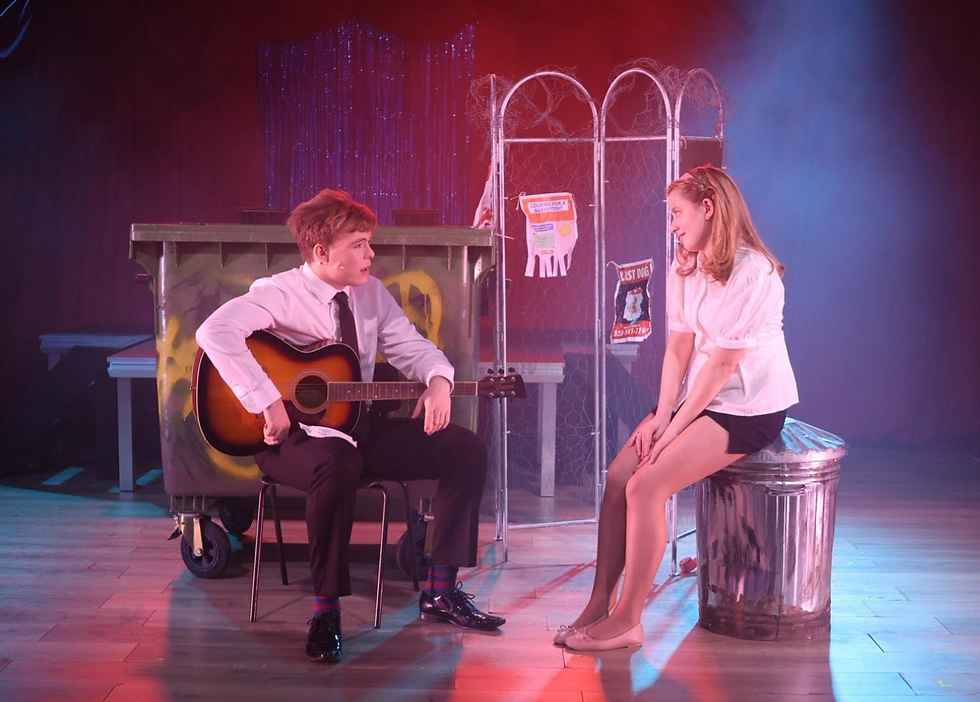
Character development was another notable strength of the direction. Relationships were clearly defined, and there was a strong sense that careful work had been done to ensure interactions felt specific and believable. Robbie and Julia’s journey, in particular, was supported by thoughtful blocking and considered moments of connection, allowing their relationship to grow naturally over the course of the show. At times, however, greater attention to smaller details would have further elevated the production. There were occasional moments that felt slightly under-polished, with minor inconsistencies in focus, gesture or staging that briefly disrupted the otherwise strong flow. These were relatively small issues, but with additional refinement, the overall impact of the direction could be even stronger.
Musical direction by Dario Regazzi, supported by Vocal Director Brianna Kelly, was a clear strength of the production. The band captured the unmistakable sound and style of the 1980s with confidence and flair, delivering a lively, rhythmically driven accompaniment that kept the show moving at an engaging pace. The fact that the orchestra was made up entirely of students made this achievement all the more impressive, and there was a palpable sense of musicality, commitment and enjoyment coming from the pit.
Tempos were well chosen and consistent throughout the evening, helping to maintain momentum and ensuring that musical numbers never dragged. The energy of the band contributed significantly to the dynamism of the show, particularly in ensemble numbers and dance-heavy sequences where drive and rhythmic clarity are essential. Vocal work across the cast was strong, with harmonies generally well learned and confidently delivered. Unfortunately, the effectiveness of this work was at times undermined by balance issues. Whether through sound mixing or microphone distribution, some harmonies were lost or uneven, meaning that the considerable effort invested by the cast did not always translate clearly to the audience. This is an area that would benefit from closer collaboration between musical and technical teams in future productions, ensuring that vocal textures are consistently supported and heard.
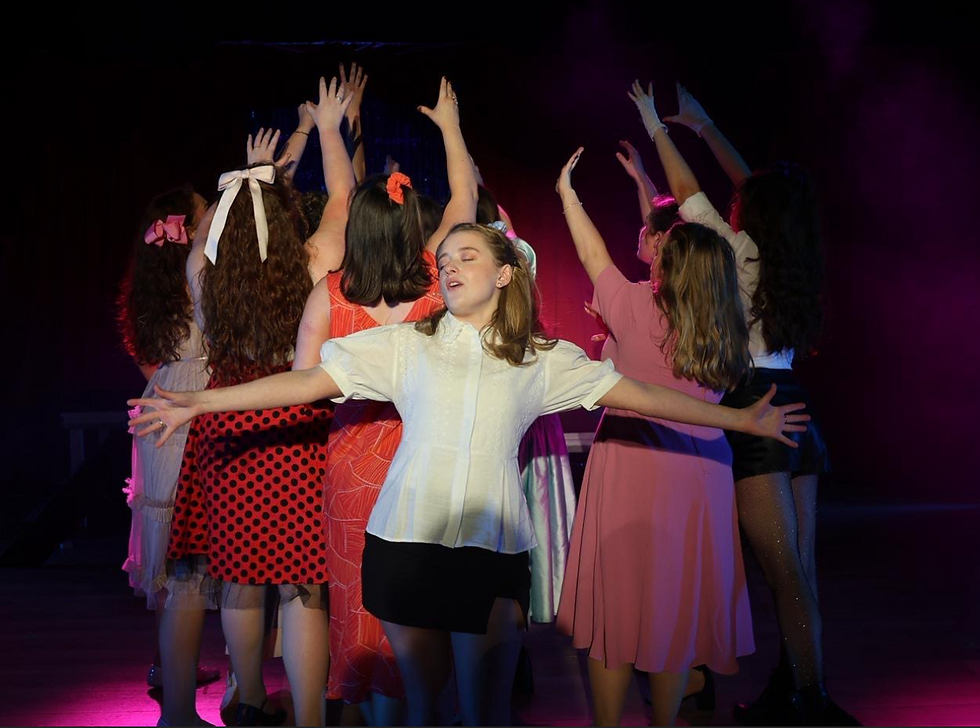
Choreography by Niamh O’Brien brought fantastic energy and stylistic clarity to the production. From start to finish, the movement work was lively, well-rehearsed and performed with impressive precision. The ensemble danced with confidence and commitment, and the overall cleanliness of execution was a real credit to both the choreographer and the cast. The 80s styling was strong throughout, with movement choices that felt era-appropriate without tipping into parody.
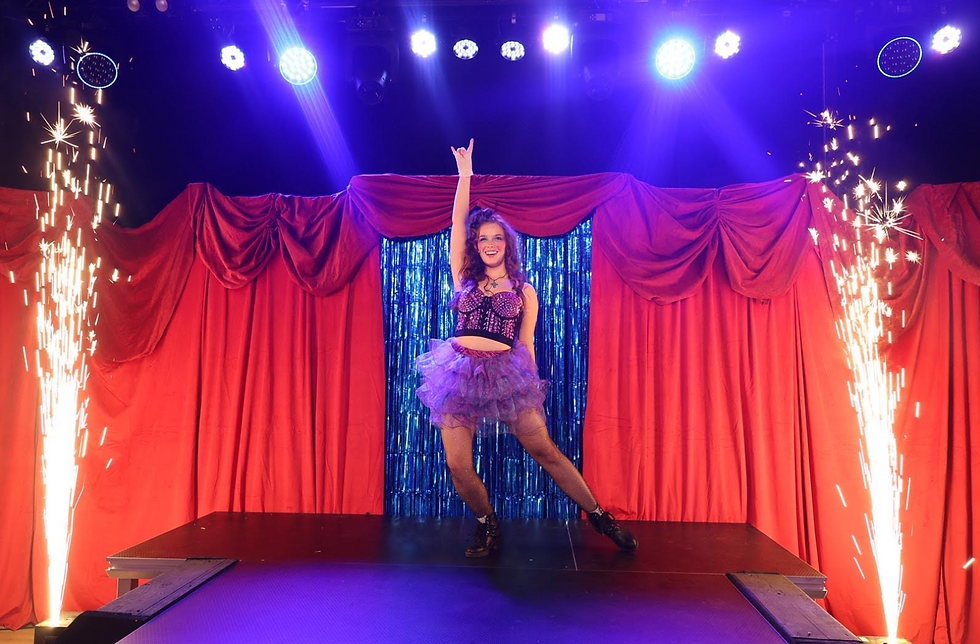
“Saturday Night” was a particular highlight, bursting with character, drive and infectious fun. The choreography captured the spirit of the song beautifully and became one of the standout moments of the evening. There were, however, moments where greater coordination between choreography and direction would have enhanced clarity. In particular, the decision for principals to dip in and out of choreography during certain numbers occasionally disrupted focus. There were also a few instances where counts were left empty, creating small pockets of inactivity that broke momentum. Tightening these moments would help maintain flow and polish, but overall, the choreography made a vibrant and valuable contribution to the production.
At the centre of the show, Fionn McGrath delivered a very strong performance as Robbie Hart. Vocally assured and emotionally engaging, he brought warmth, humour and vulnerability to the role. His characterisation was affable, lovable and delightfully goofy without ever becoming caricatured, and he interacted naturally with the rest of the cast, grounding the show with a believable and sympathetic central presence.
Aine Kinch’s Julia Sullivan was equally charming. Her portrayal was soft, sweet and sincere, supported by a lovely vocal quality that suited the role beautifully. By the end of the show, her love for Robbie felt genuine and earned, a testament to her thoughtful acting and strong chemistry with her leading partner. Ben Schachne’s Sammy struck an excellent balance between comedy and restraint, finding humour through timing and interaction rather than excess. His portrayal of Sammy as suitably clueless and idiotic was clear and consistent, particularly in his scenes with Holly.
Yvette McDonnell was a standout as Holly, bringing powerhouse vocals, confident movement and a commanding stage presence. She embodied the quintessential party girl with style and flair, owning every moment she was on stage. Joseph Gibney’s Glen Guglia was perfectly pitched: smarmy, self-centred and physically confident, with a strong understanding of the character. His performance in “All About the Green” was particularly effective, combining physicality and vocal confidence with clear intent.
Among the supporting cast, Doireann McAuley’s Linda was an absolute highlight. Her characterisation was fresh, detailed and genuinely hilarious, making this one of the most entertaining interpretations of the role in recent memory. Connor Kirwan’s George was beautifully understated, with a gentle sincerity and subtle humour that allowed the sarcasm of the role to land effectively. Lia Mullan’s Angie showed commitment and energy, though the performance occasionally felt a little forced; greater ease and trust in the material would help this role feel more grounded. Irina Agotha’s Rosie was vocally and physically very funny, though the make-up design pushed the character slightly too far into caricature, detracting from the strength of her acting. Rose Smithet, Robert Hogan, and Jack Byrne, as Crystal, Ricky and Bum/Mookie respectively, were all well-realised ensemble characters, with Jack Byrne in particular delivering a standout performance in “Single” that lifted the number significantly.
The ensemble as a whole was one of the great strengths of the production. Their energy consistently lifted the show, and there was a noticeable surge in momentum whenever they entered the stage. They moved as a tight-knit unit, with strong rehearsal evident in their clean choreography and unified performance style. Vocally, they were well prepared and committed, though let down by sound mixing issues that prevented harmonies from being fully appreciated.
Visually, the production was largely very successful. The use of wedding fabric swags as a static backdrop was inspired, immediately establishing the theme and atmosphere. Costumes were generally excellent and authentically 80s, with Holly’s “Saturday Night” look a particular standout, though Robbie’s equivalent costume would benefit from more attention. Hair design was strong and period-appropriate throughout, while make-up was mostly effective, despite some outdated ageing techniques and practical issues such as the bride’s repeatedly slipping hair extension.
Technically, the show faced some significant challenges. Lighting issues, including the loss of a follow spot early in the performance, led to inconsistency and overuse elsewhere, and cueing would benefit from refinement. Sound proved to be the weakest element overall, with missed cues, feedback issues and imbalance between band and vocals undermining otherwise strong musical work. These are solvable issues, but they require focused planning, rehearsal and communication.
Front of House operations, while delivered with warmth and good intention, would benefit from greater structure and clarity in future performances. On this occasion, the absence of clear signage or a defined focal point within the foyer meant that audience members were occasionally unsure how best to navigate the space. The late opening of the house resulted in a delayed start to the performance, and some proactive communication with the waiting audience would have helped to manage expectations. That said, the Front of House team themselves were consistently friendly, upbeat and welcoming. Their warm greetings and positive attitude went a long way, and their enthusiasm contributed meaningfully to the overall sense of enjoyment.
Ultimately, this was a joyful, ambitious and heartfelt production that showcased the considerable talent within UCD Musical Society. This company has the potential to reach an even higher standard. The heart, commitment and enthusiasm are clearly there, and with refinement, future productions could be truly outstanding.


Comments